
Designing Training Spaces That Actually Work for Manufacturing Teams
In manufacturing environments, training is constant. New hires, safety refreshers, equipment updates, process changes. Yet the spaces where that training happens are often an afterthought.
A folding table. Stackable chairs. A projector wheeled in when needed.
The problem is that manufacturing training rooms need to do more than “hold people.” They need to support learning, safety, and consistency without disrupting operations.
Why training spaces matter more in manufacturing
Training in a manufacturing setting is different from a traditional office. The stakes are higher. The pace is faster. And the audience is more diverse.
A well-designed training space helps:
-
Speed up onboarding
-
Reinforce safety protocols
-
Support hands-on and classroom learning
-
Accommodate different shift schedules
-
Reduce friction between training and daily operations
When the space works, training feels intentional. When it doesn’t, it becomes something teams work around instead of benefiting from.
Common mistakes we see in manufacturing training rooms
Most issues aren’t dramatic. They’re subtle and cumulative.
Furniture that doesn’t flex
Fixed tables and rigid layouts make it hard to switch between lecture-style learning and group work.
Poor sightlines
If half the room can’t clearly see screens, demonstrations, or instructors, engagement drops fast.
Furniture that wears out quickly
Training rooms see heavy use. Lightweight furniture designed for low-traffic offices often doesn’t hold up.
No storage or staging space
Supplies, materials, and equipment end up stacked in corners or moved in and out every session.
What works better in manufacturing environments
The most effective training spaces are designed for adaptability.
Mobile, reconfigurable tables
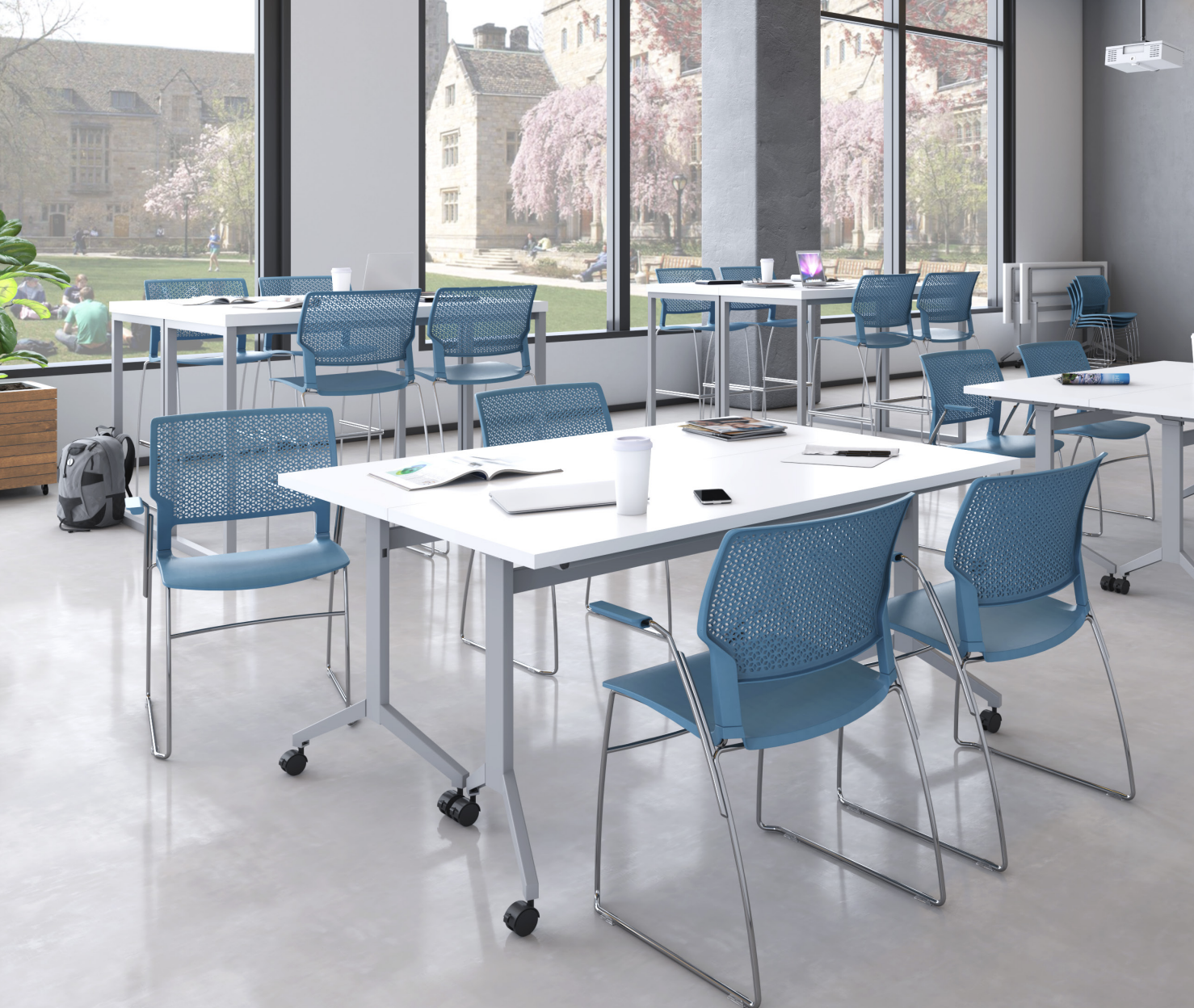
Tables on casters allow the room to shift quickly from classroom setup to group work or hands-on training.
Durable seating
Chairs need to handle frequent movement, long sessions, and repeated use without constant replacement.
Clear zones
Defined areas for instruction, collaboration, and demonstration help sessions run smoothly.
Simple transitions
The easier it is to reset the room, the more likely teams are to use it properly.
Furniture considerations that make a difference
Furniture selection plays a bigger role than most people realize.
Key things to consider:
-
Surface durability for frequent use
-
Easy cleaning and maintenance
-
Integrated power for laptops and devices
-
Storage for materials and equipment
-
Furniture that can be reconfigured without tools
Good furniture supports training without becoming the focus.
Designing for today and tomorrow
Manufacturing teams grow. Training programs evolve. What works today may need to change in a year.
The goal isn’t to design a perfect, permanent setup. It’s to create a space that can adapt as needs change without requiring a full overhaul.
When training spaces are planned intentionally, they become assets instead of limitations.
Thinking about updating or creating a training space?
A short conversation can help clarify what will work best for your team, space, and future plans.