
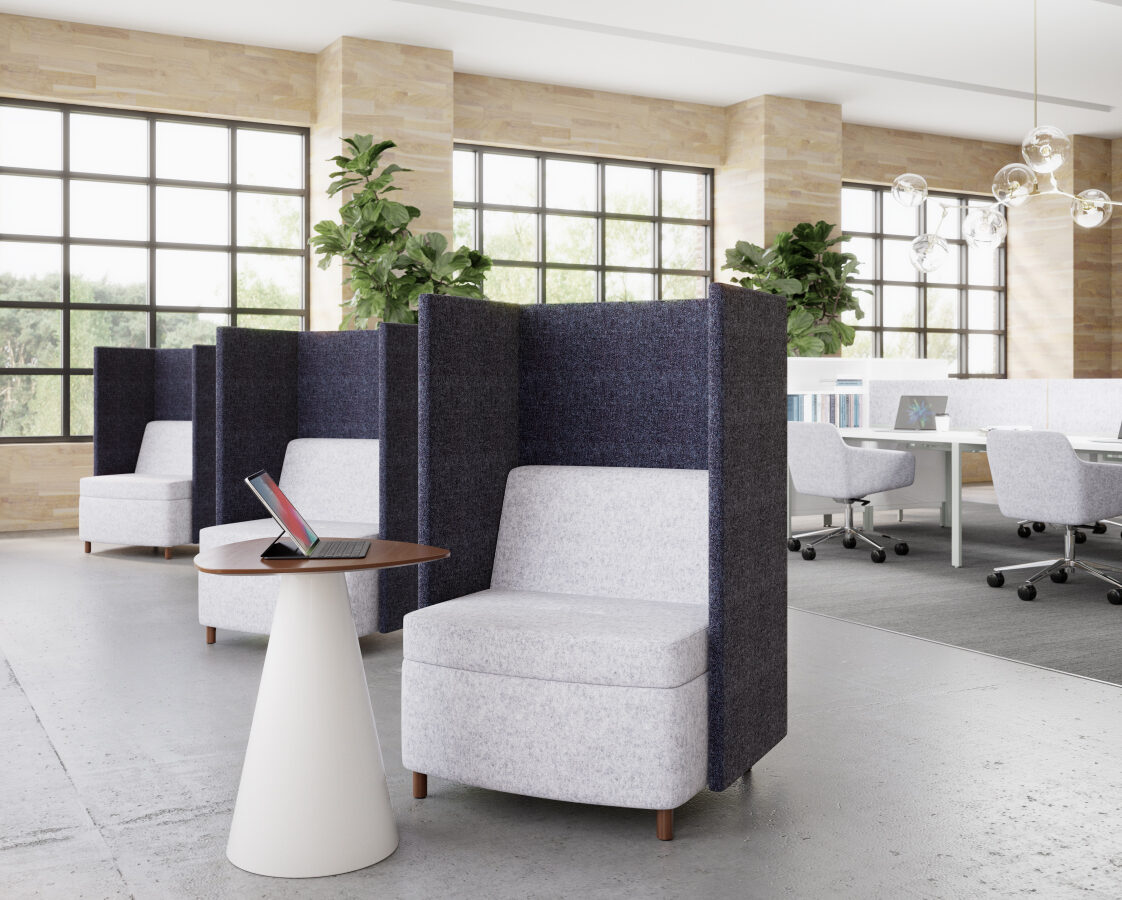
Designing Law Offices for the Future
The modern law office is evolving.
For decades, legal workplaces followed a familiar formula: private offices, formal conference rooms, and rows of workstations designed around hierarchy and focused individual work.
But today’s law firms are navigating a different reality.
Hybrid work has changed expectations.
Technology has changed how legal teams collaborate.
And perhaps most importantly, a new generation of attorneys is changing what they want from the workplace itself.
The challenge for firms is no longer simply maintaining professional office space.
It’s designing environments that support the future of legal work.
The Future Law Office Must Support More Than Focused Work
Quiet, private environments will always matter in legal workplaces.
Attorneys need space for confidential conversations, focused preparation, strategy development, and deep concentration. Clients still expect professionalism and discretion.
But increasingly, firms are recognizing that the workplace also needs to support:
- Collaboration
- Mentorship
- Flexibility
- Culture
- Recruiting and retention
- Employee experience
- Hybrid work dynamics
The office is becoming more than a place people report to.
It’s becoming a strategic tool for connection, culture, and performance.
Younger Attorneys Are Reshaping Workplace Expectations
Recent workplace research within the legal industry continues to show that workplace preferences vary significantly across generations.
While senior attorneys often prioritize traditional private office environments, younger associates frequently place greater value on:
- Flexibility
- Dynamic work settings
- Workplace choice
- Collaborative environments
- Residential-style comfort
- Spaces that feel more adaptable and less rigid
This doesn’t mean younger attorneys want to eliminate professionalism from the legal workplace.
It means they often define a productive workplace differently than previous generations.
Many younger professionals want the ability to move throughout the office based on the type of work they’re doing — shifting between focused work, collaboration, informal meetings, and mentorship opportunities throughout the day.
Mentorship and Connection Still Matter
Interestingly, even as hybrid work becomes more common, many firms are realizing the office still plays a critical role in developing younger attorneys.
Learning by proximity remains important in law firms.
Junior associates benefit from:
- Informal conversations
- Spontaneous collaboration
- Observing senior attorneys
- Team interaction
- Access to mentorship
The challenge is creating environments that encourage connection without creating constant distraction.
Forward-thinking firms are beginning to design spaces that intentionally support both focused work and interaction.
What Future-Focused Law Firms Are Doing
Many firms are moving toward workplaces that offer more variety and flexibility while still maintaining the professionalism expected in legal environments.
That may include:
- A mix of private offices and collaborative spaces
- Smaller touchdown areas for informal meetings
- More flexible conference environments
- Lounge-style gathering spaces
- Hospitality-inspired finishes and furniture
- Spaces designed to support both quiet work and team interaction
- Better acoustic planning and privacy solutions
- Offices designed with future growth and adaptability in mind
Rather than forcing one way of working, these environments support multiple work styles simultaneously.
Balancing Tradition With Modern Workplace Expectations
One of the biggest questions firms face is:
How do you modernize without losing the identity and professionalism clients expect?
The answer is balance.
The most successful legal workplaces are not abandoning the traditional law office entirely. They’re evolving it thoughtfully.
They’re creating environments that:
- Respect confidentiality and focused work
- Support client trust and professionalism
- Help attorneys collaborate more effectively
- Improve employee experience
- Appeal to future legal talent
- Adapt more easily as workplace expectations continue to evolve
The Law Office Is Becoming Part of Talent Strategy
For many firms, workplace design is no longer simply an operational decision.
It’s becoming a recruiting and retention conversation.
Today’s attorneys — especially emerging talent — are evaluating more than compensation and prestige.
They’re also evaluating:
- Workplace flexibility
- Culture
- Technology
- Employee experience
- Wellness
- Collaboration
- Office environment
The physical workplace increasingly communicates something about how a firm thinks, operates, and invests in its people.
Designing for the Next Generation of Legal Work
The future law office will likely look different than it did even five years ago.
Not because professionalism is disappearing.
But because the way attorneys work, connect, and collaborate is continuing to evolve.
The firms that think strategically about workplace design today will be better positioned to:
- attract talent
- support mentorship
- improve employee experience
- strengthen culture
- adapt to changing work models
- create environments that support both clients and employees long term
The modern legal workplace is no longer just about where work happens.
It’s about creating a space designed for the future of the profession.
Start the Conversation
Whether your firm is planning a renovation, considering a move, or simply exploring ways to improve the workplace experience, the Office Furniture Source team can help.
Take the Law Firm Workplace Assessment or schedule a consultation to explore workplace strategies tailored specifically for your firm.
Because great legal work deserves a workplace designed to support it.