Collaborative Workspaces: How Office Design Can Strengthen Team Collaboration
The way people work has changed.
Today’s teams collaborate constantly — sharing ideas, solving problems together, and moving projects forward faster than ever before. But many workplaces were designed for a different era, when work was primarily individual and collaboration happened only in scheduled meetings.
That shift is why many organizations are rethinking their collaborative workspace design.
When the workplace supports collaboration, something powerful happens: communication improves, ideas flow more freely, and teams make decisions faster.
The key is creating spaces intentionally designed for collaboration.
What Is a Collaborative Workspace?
A collaborative workspace is an area of the office designed to support teamwork, communication, and idea sharing.
Instead of traditional conference rooms or rows of individual desks, collaborative spaces encourage interaction and flexibility. They give employees a place to gather, talk through ideas, and work together more naturally.
These environments are becoming essential for organizations that want to support:
-
Team collaboration
-
Problem-solving and innovation
-
Cross-department communication
-
Hybrid meetings with remote team members
In many workplaces, collaborative areas now serve as the central hub where teams connect throughout the day.
Why Collaborative Office Spaces Matter
Companies that invest in collaborative office spaces often see meaningful improvements in both culture and productivity.
Stronger Communication
When people have convenient spaces to gather, conversations happen more easily. Instead of sending another email or scheduling a formal meeting, teams can quickly connect and solve problems together.
Faster Decision-Making
Collaboration spaces allow teams to work through challenges in real time. This reduces delays and helps organizations move projects forward more efficiently.
Increased Innovation
Some of the best ideas happen when people build on each other’s thinking. A well-designed collaborative workspace encourages those moments.
A More Engaging Workplace
Employees value workplaces that allow them to connect with colleagues. Collaborative areas create opportunities for interaction and help strengthen company culture.
Types of Collaborative Spaces in the Modern Office
Not all collaboration looks the same. The most effective workplaces provide a variety of collaborative environments designed for different types of interaction.
Huddle Spaces
Small collaboration areas designed for quick discussions between two to four people. These spaces are ideal for reviewing ideas, solving problems, or making quick decisions.
Project Rooms
Dedicated team spaces where groups can spread out materials, track progress on whiteboards, and work together over multiple days or weeks.
Open Collaboration Zones
Comfortable seating areas designed to encourage informal conversations and spontaneous teamwork.
Hybrid Meeting Rooms
Technology-enabled spaces that support both in-person and remote participants, allowing teams to collaborate seamlessly regardless of location.
Providing a mix of these environments helps employees choose the space that best supports the work they are doing.
The Role of Furniture in Collaborative Workspace Design
Office furniture plays a critical role in how well collaborative spaces function.
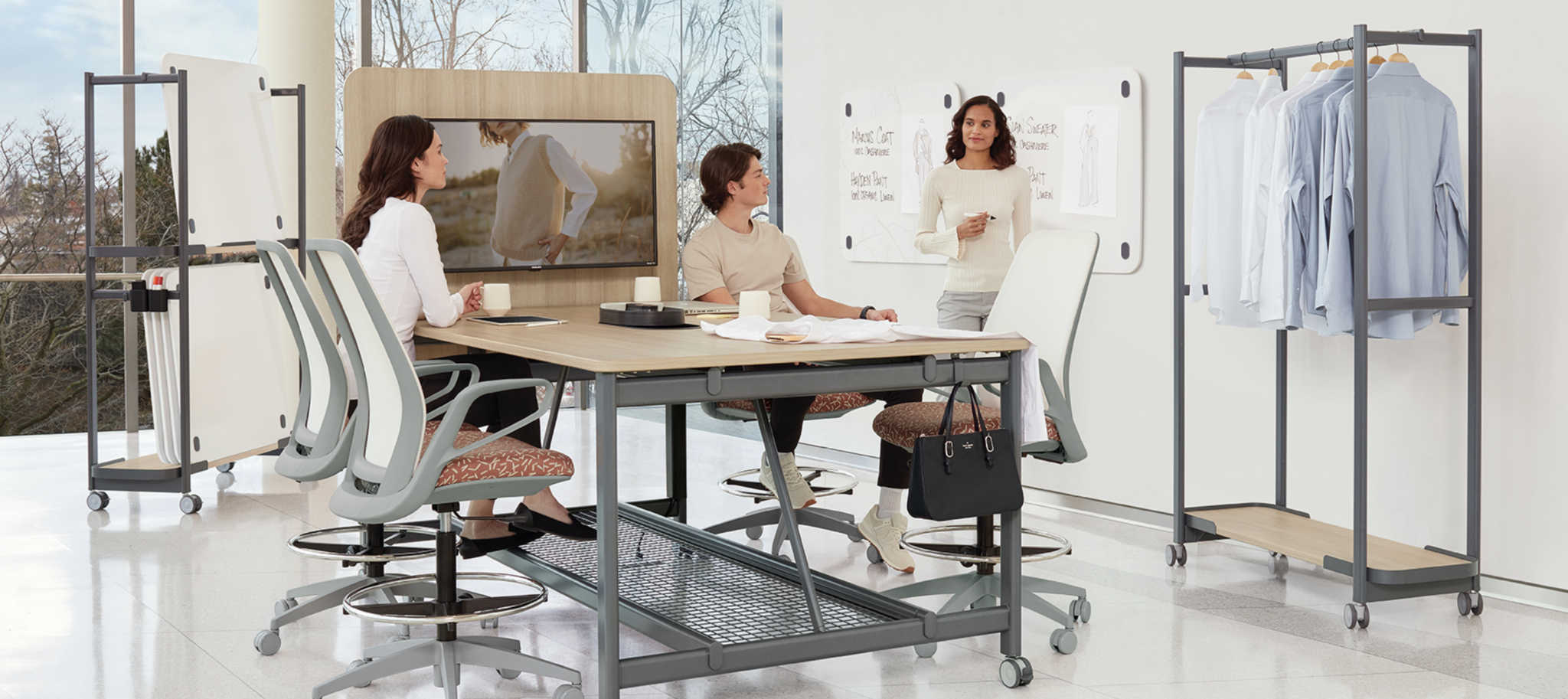
Flexible tables, modular seating, mobile whiteboards, and integrated technology allow teams to easily adapt a space to fit their needs.
Other design elements also matter, including:
-
Acoustic solutions that reduce noise distractions
-
Lighting that supports comfort and focus
-
Layouts that balance collaboration with individual work areas
When these elements are thoughtfully combined, the workplace becomes a tool that supports both teamwork and productivity.
Designing Collaborative Spaces That Work
Creating effective collaborative spaces requires more than simply rearranging furniture.
Organizations need to consider how their teams actually work: how often they collaborate, what types of conversations happen most frequently, and how hybrid work impacts the environment.
At Office Furniture Source, we help organizations design workplaces that support both focused work and meaningful collaboration. By understanding how teams interact, we create environments that help people connect, share ideas, and work more effectively.
Because when the workplace is designed with intention, the power of place becomes clear.