
The Hidden Role Office Design Plays in Client Confidence
Long before legal strategy is discussed, a client is already forming an opinion about your firm.
It starts the moment they walk through the door.
The reception area.
The lighting.
The conference room.
The level of comfort.
The sense of professionalism.
Even the acoustics of the space itself.
Whether intentional or not, your office environment communicates something to clients before a single conversation begins.
For law firms, workplace design is not just an operational decision.
It’s part of the client experience.
Clients Notice More Than You Think
Most law firms focus heavily on client service — responsiveness, expertise, communication, and results.
But the physical environment quietly reinforces those perceptions.
A well-designed office can help communicate:
- professionalism
- attention to detail
- stability
- organization
- confidence
- discretion
- trustworthiness
An outdated, uncomfortable, or poorly functioning environment can unintentionally create friction or distraction during important conversations.
Clients may never explicitly comment on the office itself.
But they absolutely notice how the space makes them feel.
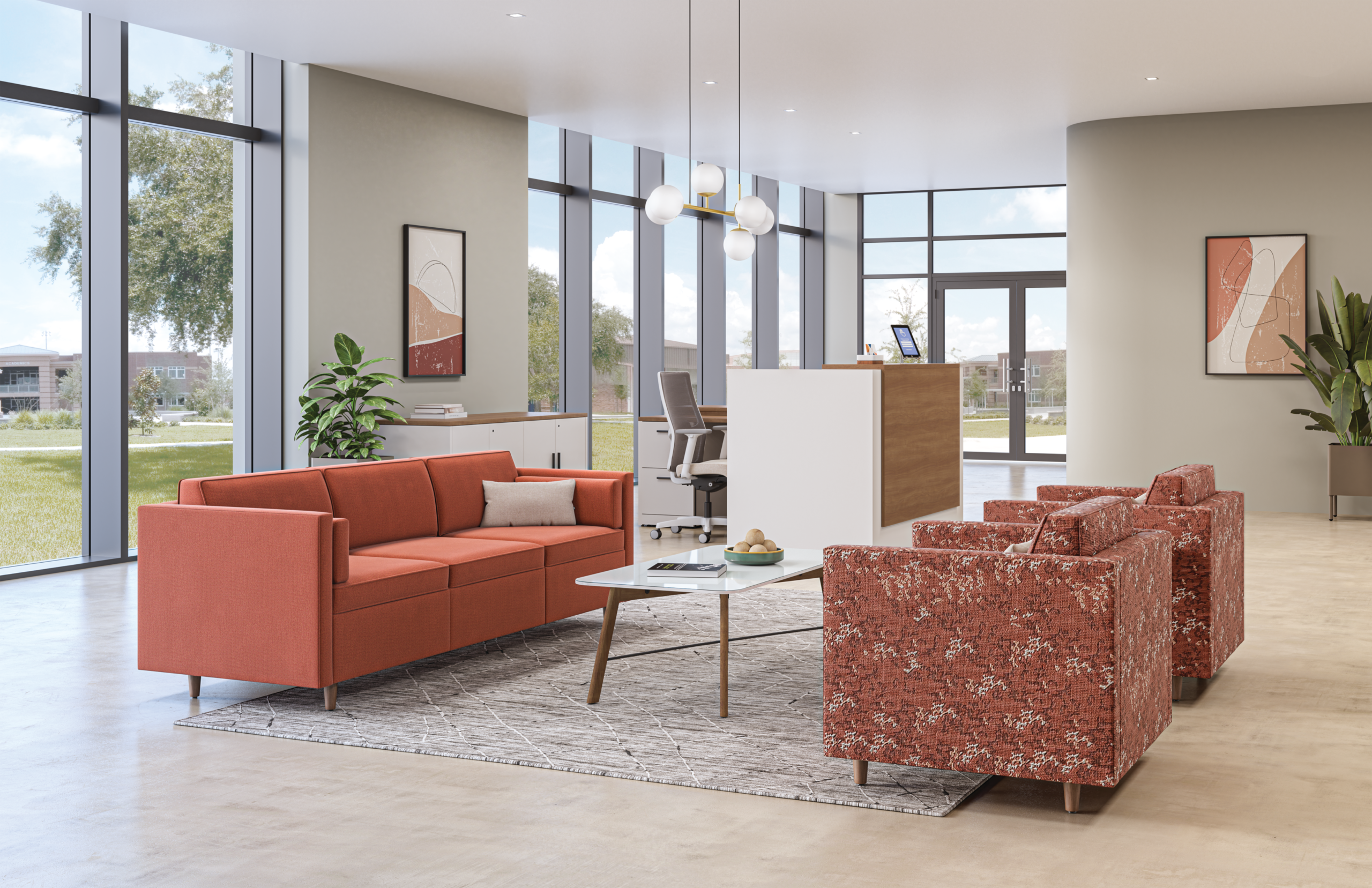
The Reception Area Sets the Tone
First impressions often begin in reception.
For many firms, this space is doing more work than ever before. It’s not simply a waiting area — it’s the client’s first physical interaction with your brand.
The most effective legal office reception spaces often balance:
- professionalism
- warmth
- comfort
- organization
- privacy
Clients want to feel confident they are in capable hands.
But they also want to feel welcomed and at ease.
Increasingly, firms are moving away from environments that feel overly cold or intimidating and toward spaces that feel polished, approachable, and intentional.
Conference Rooms Shape High-Stakes Conversations
Some of the most important conversations in a law firm happen inside conference rooms.
Client meetings.
Negotiations.
Mediation discussions.
Sensitive conversations.
Strategy sessions.
Yet conference room design is often overlooked.
The right conference environment should support:
- privacy
- focus
- comfort
- technology integration
- eye contact and conversation flow
- hybrid meeting functionality
Today’s law firm conference rooms also need to support both in-person and virtual collaboration seamlessly.
Poor lighting, uncomfortable seating, weak acoustics, or awkward layouts can quietly impact the experience and effectiveness of a meeting.
Privacy and Acoustics Matter More Than Ever
In legal environments, privacy is not optional.
Clients need confidence that confidential conversations remain confidential.
As some firms experiment with more open or collaborative layouts, acoustics and sound control have become increasingly important considerations.
Forward-thinking firms are paying closer attention to:
- sound masking
- acoustic materials
- conference room privacy
- enclosed focus areas
- furniture solutions that reduce noise distractions
The goal is not simply reducing noise.
It’s reinforcing trust.
When clients feel conversations can happen comfortably and privately, it changes the overall experience of the office.
Professional Doesn’t Have to Feel Cold
Traditionally, many law offices leaned heavily formal:
dark furniture, rigid layouts, minimal softness, and highly traditional finishes.
Today, many firms are finding a better balance.
Professionalism still matters deeply.
But increasingly, firms also want offices that feel:
- comfortable
- welcoming
- modern
- human
- less intimidating
This is especially important as firms compete for both clients and talent.
Many modern legal workplaces now incorporate:
- softer seating areas
- warmer finishes
- hospitality-inspired elements
- natural light
- flexible meeting spaces
- more residential-style comfort in select areas
The result is often an environment that still communicates expertise and professionalism — while making clients feel more relaxed and connected.
The Office Environment Reinforces Your Brand
Every law firm has a reputation and identity.
Some firms position themselves around:
- precision
- sophistication
- responsiveness
- innovation
- accessibility
- high-touch service
The physical workplace should support that story.
Your office environment becomes an extension of your brand experience.
It tells clients:
- how you operate
- what you value
- how detail-oriented you are
- how you treat people
- whether your firm feels current and forward-thinking
Often, clients interpret these signals subconsciously.
Law Firm Office Design Is Becoming More Strategic
As firms rethink workplace strategy, many are realizing the office serves multiple audiences simultaneously:
- clients
- attorneys
- staff
- recruits
- referral partners
The most effective legal workplaces are being designed not just for efficiency — but for experience.
That includes:
- stronger client impressions
- better collaboration
- improved attorney experience
- increased flexibility
- environments that support both confidentiality and connection
Designing a Workplace That Builds Confidence
The best law offices don’t simply look impressive.
They help clients feel:
- comfortable
- confident
- heard
- protected
- respected
Because ultimately, trust is at the center of every client relationship.
And increasingly, the workplace itself plays a quiet but meaningful role in reinforcing that trust.
As law firms continue to evolve, office design is becoming more than aesthetics or furniture selection.
It’s becoming part of the overall client experience strategy.
Start the Conversation
Whether your firm is planning a renovation, considering a move, or simply exploring ways to improve the workplace experience, the Office Furniture Source team can help.
Take the Law Firm Workplace Assessment or schedule a consultation to explore workplace strategies tailored specifically for your firm.
Because great legal work deserves a workplace designed to support it.