Walk into an office today and it probably doesn’t look — or feel — like it did even three years ago. Hybrid schedules reshaped how often people come in. Wellness moved from a perk to an expectation. And furniture had to catch up to all of it.
At Office Furniture Source, we spend a lot of time watching how workplaces evolve, because the furniture that supports them has to evolve right along with them. Here’s what we’re seeing take hold in 2026.
Warmth Is Replacing the Corporate Look
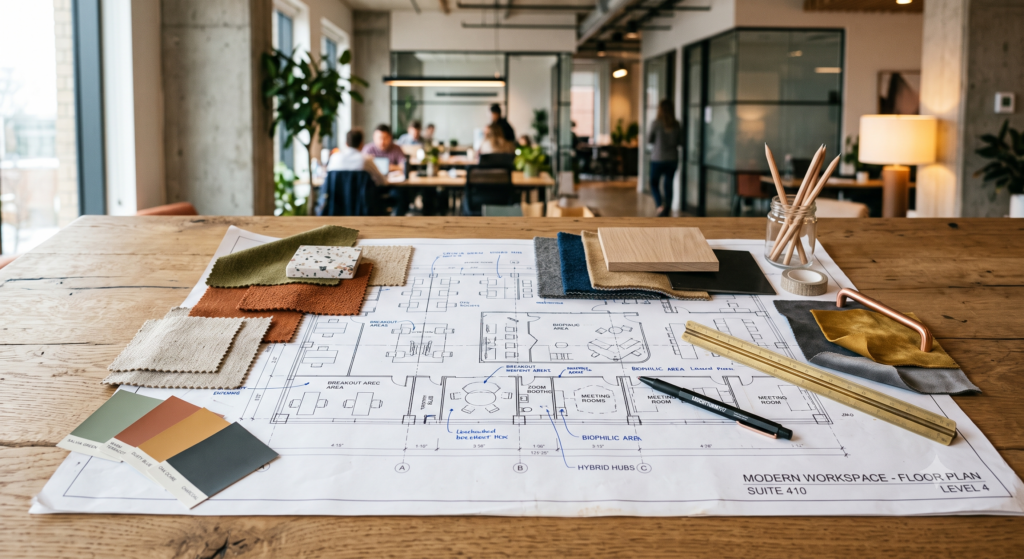
The sterile, all-white, laminate-and-metal office is fading. In its place: natural wood tones, layered textures, upholstered seating, and softer lighting. Offices are starting to feel more residential — less like a place you’re processed through, and more like a place people actually want to spend the day.
This isn’t just an aesthetic shift. Warmer, more human spaces support how people actually feel while they work, which affects how long they stay engaged and how comfortable they are bringing clients through the door.
Flexibility Is the Baseline, Not the Upgrade
Modular furniture used to be a nice-to-have for growing companies. Now it’s the default. Desks, storage, and dividers are built to shift, scale, and reconfigure without a renovation every time a team restructures or a hybrid schedule changes.
The goal is real adaptability — furniture systems that let a space change fast and cheaply — not just furniture that looks flexible but takes a construction crew to move.
Seating Is Being Treated as a System
Ergonomic seating is no longer a premium add-on; it’s expected. But the bigger shift is in how seating is being planned. Instead of one chair for every desk, offices are building out a range: task seating, focus seating, lounge seating, and casual perching, each suited to a different kind of work throughout the day.
The thinking behind it is simple — people move between modes constantly, and their furniture should move with them.
Noise Is Finally Getting Addressed
Open offices aren’t going away, but the noise problems that come with them are getting real attention. Acoustic panels, privacy pods, and sound-absorbing materials are being built into spaces to create zones for focused work without walling people off completely.
The balance organizations are after: quiet without isolation.
Technology Is Built In, Not Bolted On
Power access, cable management, and charging are increasingly designed into the furniture itself rather than added as an afterthought. Desks and tables double as charging hubs. Cable paths keep surfaces clean. The result is workstations and meeting rooms that feel less cluttered and more intuitive to use.
Sustainability Has Real Substance Behind It
Eco-conscious design in 2026 goes beyond a label. Buyers are asking about recycled content, durability, and where materials actually come from — and manufacturers are responding with more transparent sourcing and construction built for a longer lifecycle.
Color Is Getting Strategic
Bold, brand-saturated color schemes are giving way to something more intentional: warm neutrals as a base, with strategic accent colors woven in through textiles and finishes rather than splashed across every surface. It’s a subtler way of expressing brand identity — one that supports focus and calm rather than competing with it.
Social Spaces Are Doing More Work
Cafés, lounges, and informal gathering areas are being designed with the same care as conference rooms. As offices lean into their role as a hub for connection and culture, these spaces are becoming a bigger part of the plan, not an afterthought tucked into a leftover corner.
What This Means for Your Space
None of these trends exist in isolation, and none of them require starting from scratch. Most organizations find that a few thoughtful updates, rather than a full redesign, are enough to bring a space up to speed with how their teams actually work today.
If it’s been a while since you’ve taken a fresh look at your office, it may be worth asking: does our space reflect how we work now, or how we worked a few years ago?
At Office Furniture Source, we help organizations answer that question and turn the answer into a space that works — for their people, their clients, and their culture.
Let’s talk about what’s next for your space.